
At the end of February, the market felt something it had not seen for months: optimism.
Recovered paper prices looked ready for a meaningful recovery. Demand was improving, inventories were manageable, and the seasonal spring spike appeared to be arriving more or less on schedule. Then geopolitics intervened again.
The conflict around Iran abruptly changed the tone. Exporters, normally a stable pillar of demand, stepped back almost overnight. Logistical uncertainty increased, transport costs moved higher, and established trade flows were disrupted. European buyers reacted quickly and immediately pushed back on pricing. What might have developed into a controlled upward move turned instead into a nervous and fragmented market.

Now, at the start of April, the picture remains unresolved. Suppliers continue to say they are empty. At the same time, they are clearly waiting for the annual price spike that traditionally appears in this period. The only real question is whether that spike will still materialise, and if it does, who will capture the benefit.
The mills are approaching the market with discipline. Packaging paper prices are clearly moving upward, but there is little appetite to pass that increase fully through to the raw material side. After years of weak or even loss-making results, the sector appears determined to repair its own economics first. The message is clear enough: room for higher prices may exist, but it will be released carefully and in stages.
Suppliers are playing their own game. Officially, inventories are low. Unofficially, the market suspects that some volumes are still being held back. The tactic is familiar: wait until pressure builds on the buying side, then move. It is a classic strategy, but not a risk-free one. In a volatile market, waiting too long can mean missing the moment entirely.
Traders are caught in the middle. They are trying to hold the market together, often against better judgment. In the first weeks of April, loads are changing hands at zero margin or even negative margin, simply to preserve relationships and protect positions. At this stage, staying commercially relevant matters more than immediate profitability.
That leaves the market in an uncomfortable position. Everyone senses that movement is needed, but no one wants to be the first to give way.
Who wins this contest? Probably no one outright. Mills have the discipline to contain raw material inflation. Suppliers have the ability to imply scarcity. Traders keep the machinery running, but they do so at their own expense.
What is certain is that the game is fully underway. As so often in the recovered paper market, the outcome will only become obvious once the opportunity to change strategy has already passed.


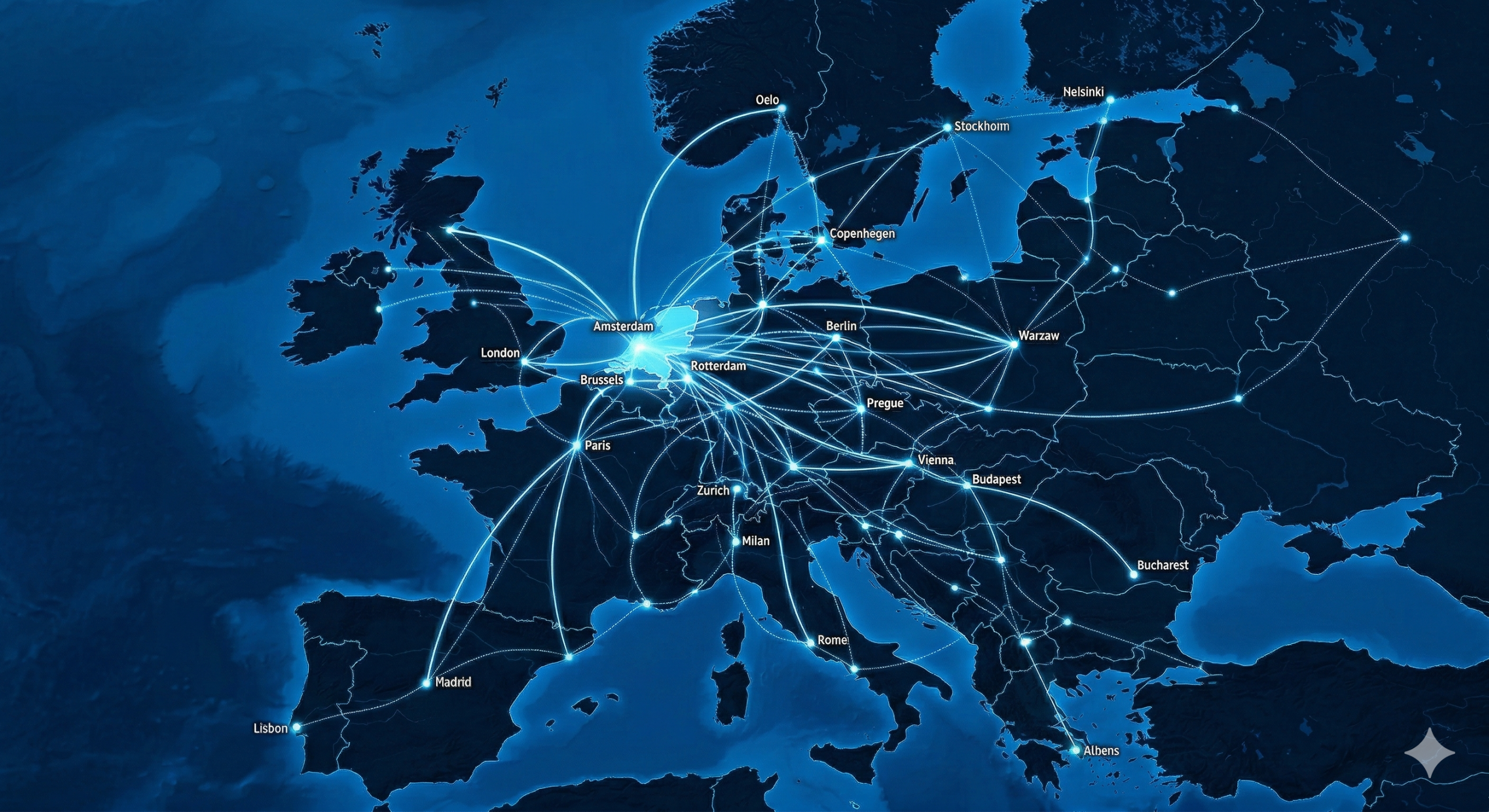
The launch of DIWASS, the digital system intended to streamline cross-border waste transport within the EU, appears to be slipping once again. In the market, there is growing talk of a six-month delay, possibly pushing implementation to the end of the year. Officially, little has been confirmed. Unofficially, the conclusion is becoming hard to avoid: the system is not ready.
The underlying reasons are familiar and, frankly, predictable. The software still faces fundamental weaknesses. Member states are moving at very different speeds in terms of preparation and technical readiness. More importantly, a significant number of practical and legal questions raised by national authorities remain unanswered, or at best only partly addressed.
The debate around the two-day deadline for notification and execution of transport movements illustrates the problem well. In theory, the rule supports transparency and control. In practice, it raises immediate questions about operational feasibility. Waste transport is not a neat or perfectly predictable chain. Not every shipment fits comfortably into a strict digital timetable.
The same lack of clarity applies to the role of the shipper. Consider a Dutch trader loading material in Germany and handling the transport itself. Can that company register the movement in DIWASS through its Dutch entity, or will the system require separate registration in every member state involved, complete with local addresses and permits? These are not peripheral questions. They sit at the centre of daily business. And it is exactly there that the system still lacks clear, workable answers.
This leads to the bigger issue: system integration. How will the various national platforms communicate with one another? Interoperability is not a technical side note. It is the backbone of the entire DIWASS concept. Without reliable and seamless data exchange, a digital solution quickly becomes a bureaucratic maze. That would undermine the very purpose of the project.
That is why the current concerns should not be treated as isolated technical problems. They are symptoms of a broader mismatch between ambition and execution. The EU’s objective is understandable and, in principle, sensible: more transparency, better enforcement, and more efficient cross-border processes. But the implementation increasingly looks like a familiar European pattern. The vision is strong. The practical preparation is lagging behind.
Digitalising a complex, cross-border sector requires more than software. It requires coordination, legal clarity, operational realism, and time. That realism appears to have been underestimated for too long.
DIWASS may still become an important step forward. But that will only happen if the system is robust, workable, and broadly supported by the parties expected to use it. If it is introduced too early or in incomplete form, the likely result is not progress but friction: delays, additional administrative burdens, and a loss of confidence among market participants.
Seen in that light, postponement is not necessarily a weakness. It may simply be the first realistic decision in a process that has so far been driven too much by timetable and too little by operational readiness.
European GD producers have reached a point that can no longer be ignored. For years, established names such as Reno De Medici, Mayr-Melnhof, and Smurfit Kappa could rely on scale, longstanding customer relationships, and a relatively predictable market environment. That period has ended.
The recent financial difficulties at Reno De Medici, including a missed interest payment, are not an isolated event. They are a visible symptom of deeper structural weakness within the sector. Ageing machine parks, high energy costs, high labour costs, and a cost base that no longer competes effectively on the global market are now becoming impossible to overlook.
At the same time, competitive pressure from outside Europe is accelerating. Producers in China and Turkey operate with newer equipment, lower cost structures, and a more aggressive commercial mindset. While many European players still think in terms of historical margins and established market positions, these competitors are playing by a different logic: volume, price, and speed.
What makes the situation more difficult is that parts of the European industry still appear to rely on an outdated form of confidence, as if quality alone is enough to defend market share, as if customer loyalty remains automatic. The market has moved on. Buyers are looking more critically at price and reliability of supply. Sentiment is being replaced by spreadsheet logic.
A similar shift is visible in FBB, including GC, GC1, and GC2 grades. Groups such as Metsä Board, Holmen, Stora Enso, and Foldingboxboard seem better positioned on the surface because of their focus on virgin fibre, premium quality, and sustainability. Even so, the ground beneath them is changing as well.
Demand for premium board is growing more slowly than many had expected. Customers are becoming more critical of price gaps. International competition is also beginning to gain ground in this segment. Investment cycles remain long, capital intensity is high, and the room for strategic error is limited.
The likely outcome is a period of consolidation and restructuring. Not every producer will survive in its current form. Older machines will be shut down more quickly. Capacity will disappear, shift, or be restructured. Companies that fail to invest in efficiency and modernisation will steadily lose ground.
The industry will also have to let go of old reflexes. This is no longer a market in which past reputation guarantees future relevance. It demands a different posture: less confidence rooted in legacy, more realism, more strategic discipline, and more willingness to adapt.
For both GD and FBB producers, the conclusion is becoming harder to avoid. The future belongs to those who control their cost base, make clear strategic choices, and adapt to a market that is becoming more international and more unforgiving each year. Those who fail to do so will find that reputation offers little protection.
The European board industry is not collapsing. But it is entering a period of hard reset, and not every player will come through that reset unchanged.

 English
  Nederlands
  Deutsch